


23 February 2026
Introduction
Streaming ultra-high-definition video, running artificial intelligence models or accessing cloud platforms may feel rapid and unreal. In reality, every digital interaction depends on highly physical infrastructure. Data centres that consume broad electrical power and generate equally broad heat loads.
Across the Middle East, rapid digital transformation is accelerating demand for hyperscale data-centre frameworks. Governments and private investors are expanding digital infrastructure to support economic diversification, smart-city development and AI-driven industries.
Yet deploying hyperscale facilities in bone-dry Gulf environments introduces an essential engineering challenge: how to use up extreme heat in regions where ambient outdoor temperatures can approach 50 °C.
Addressing this challenge is not mainly an IT problem. It is an integrative engineering, thermodynamic and sustainability problem that defines the long-term viability of regional digital infrastructure.
High-Density Computing in Extreme Environments
Modern hyperscale data centres function as large-scale energy conversion systems. Nearly all electrical energy absorbed by servers is eventually released as a heatwave, which must be removed over and over to maintain operational stability.
The fast growth of artificial intelligence and high-performance computing is driving higher rack power densities.
- Traditional enterprise racks typically operate in the 5–10 kW range.
- AI-focused deployments increasingly go beyond 50 kW, with skyrocketing designs targeting 100 kW-plus per rack.
In temperate climates, ambient air can assist heat rejection. In arid Gulf conditions, however, high external temperatures, airborne dust, solar radiation, and coastal humidity variation significantly increase cooling complexity and infrastructure stress.
As a result, hyperscale facilities in the region require purpose-built mechanical, electrical, and structural strategies rather than direct replication of European or North American designs.
Why Build Data Centres in the Gulf?
Despite environmental challenges, the Middle East places compelling strategic advantages for hyperscale deployment at service:
- Geographic connectivity linking Europe, Asia, and Africa with low network latency
- Strong government investment in digital economies and advanced industries
- Rapid regional demand growth for cloud, AI, and data-sovereignty infrastructure
These drivers are positioning the GCC as a key global data-exchange corridor, even as thermal management remains one of the most critical engineering constraints.
Cooling Beyond Air: The Shift Toward Liquid Technologies
Historically, data centres relied on air-based cooling, distributing frigid air through raised floors or contained aisles.
As rack densities rise, air alone turns out meagre to remove heat dexterously. This drawback is accelerating adoption of liquid-based cooling approaches, including:
- Direct-to-chip cooling, where coolant circulates through cold plates indentured to processors
- Immersion cooling, where servers operate within di-electric fluid that absorbs and transfers heat
Liquids conduct heat far more effectively than air, enabling higher compute density, lower energy consumption per workload, and improved thermal stability, all critical conveniences in desert climates.
Howbeit, implementing these systems in the Gulf requires:
- Heat-rejection machinery designed for sand, solar exposure and extreme ambient temperatures
- Precision plumbing and leak-prevention engineering
- Integrated monitoring and redundancy to protect uptime
This serves as a crucial redesign of traditional data-centre mechanical systems, rather than an incremental upgrade.
Structural Resilience Under Thermal Stress
While cooling systems manage the heat inside, structural and envelope design must secure facilities from the outside environmental stress. Key engineering considerations include:
- Thermal expansion and contraction from large day-night temperature swings
- Dust ingress control through sealed façades and filtration systems
- Solar heat gain reduction via material selection and façade design
- Load-bearing capacity for dense cooling equipment, generators, and power systems
These factors make hyperscale facilities in dry regions closer to industrial infrastructure than conventional commercial buildings.
Efficiency and Sustainability in High-Temperature Regions
Energy efficiency has put down roots at the centre of hyperscale economics and environmental performance.
The industry’s primary metric, Power Usage Effectiveness (PUE), measures the ratio of total facility energy to IT energy, where values closer to 1.0 indicate higher efficiency.
Achieving low PUE in hot climates is intrinsically more challenging because cooling systems must work harder. Additional sustainability considerations include:
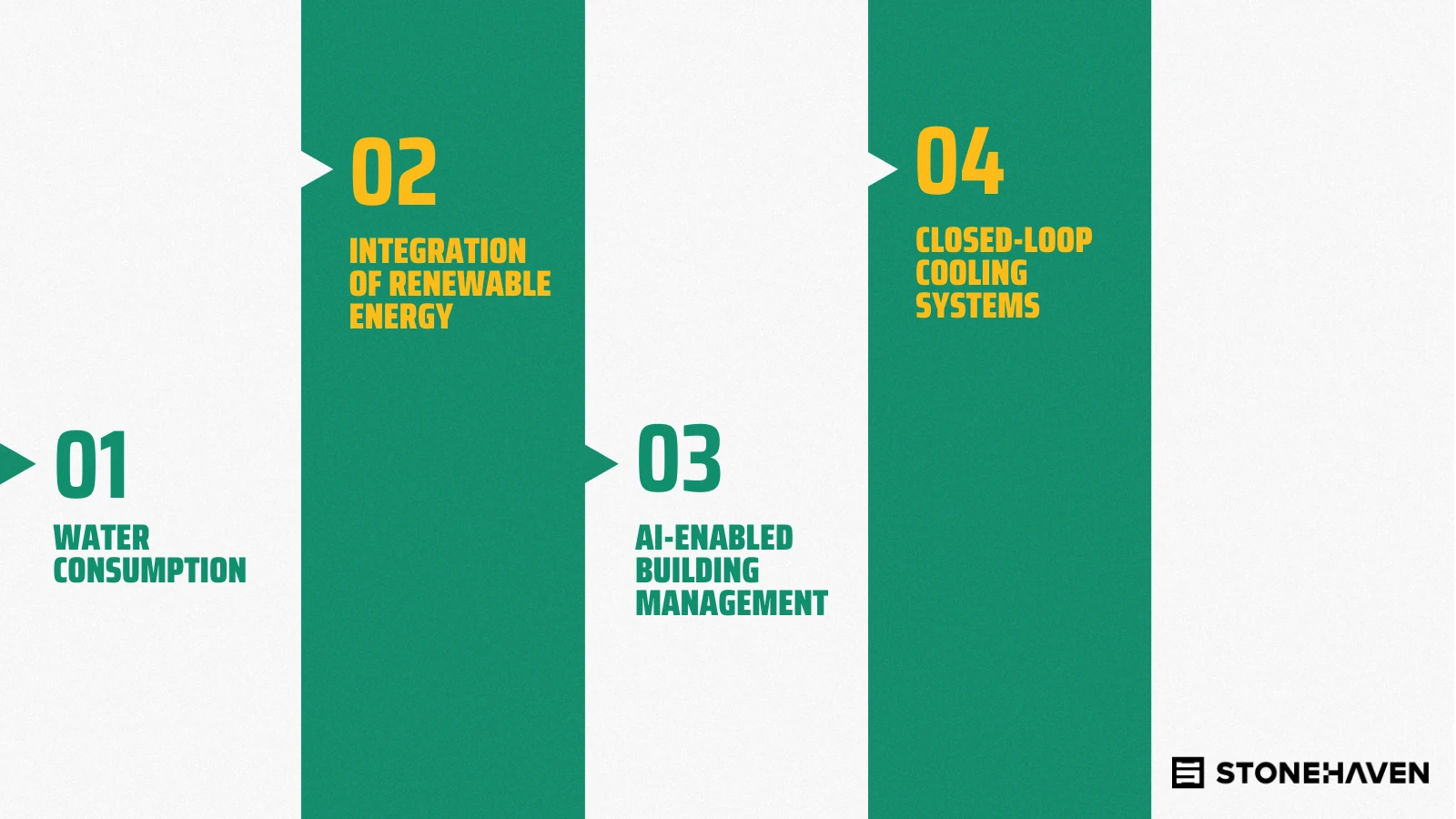
- Water consumption from evaporative cooling technologies
- Integration of renewable energy, notably solar generation
- AI-enabled building management to optimise cooling dynamically
- Closed-loop cooling systems that reduce resource loss
Balancing thermal reliability, energy efficiency and water stewardship is becoming an acute engineering crash project for Gulf hyperscale projects.
The Role of Specialist Engineering in Hyperscale Delivery
Given the scale of capital investment and operational risk, hyperscale data-centre delivery clamor for integrated engineering expertise spanning:
- Arid climate thermal modelling and environmental design
- Advanced MEP systems for high density compute
- Structural resilience and sealed envelope construction
- Digital coordination through Building Information Modelling (BIM)
- Lifecycle focused efficiency and operational optimisation
Coordinated multidisciplinary design is essential to make sure performance, resilience and long-term cost control in intense climates.
Conclusion: Engineering the Digital Backbone of the Desert
The Middle East’s digital expansion is accelerating rapidly, powered by AI, cloud computing and smart-city development.
Yet the grand slam of this transformation, sooner or later, depends on engineering realities rather than digital ambition. Heat rejection, structural resilience, energy efficiency and sustainability will call the shots to whether hyperscale infrastructure can operate reliably in some of the world’s coarse climates.
Understanding, and solving, the thermodynamics of the cloud is ergo central to building the region’s long-term digital backbone.
About Us
Stonehaven is a specialist engineering and construction consultancy based in Dubai, delivering advanced engineering solutions across the UAE and wider GCC region, with offices in Dubai, the UK, and Sri Lanka. Our engineering team supports complex developments from concept through to operational readiness, ensuring technical precision, climate resilience, performance efficiency and long-term asset reliability at every stage.
We deliver value through specialist engineering consultancy services tailored to the technical demands of complex infrastructure projects. Our Engineering services focus on advanced MEP design integration, structural resilience, thermal modelling and performance optimisation, particularly for hyperscale data centres and high-density digital infrastructure in arid climates.
Whether you require engineering support in the UAE or across the wider GCC region, Stonehaven provides technically robust, climate-responsive engineering solutions that ensure performance, efficiency and long-term operational reliability.