






11 February 2026
This Week’s Cost Intelligence
We created the SCI (Stonehaven Cost Index) to give project teams a simple, reliable way to track weekly construction cost changes. It shows what is going up, what is stable, and what may affect your project budgets.
Our cost management team reviews real market data each week and turns it into clear, practical insight you can use for estimating, cost planning, and cost control helping you spot risks early and make informed decisions on live projects.
Weekly Takeaways For Projects
-
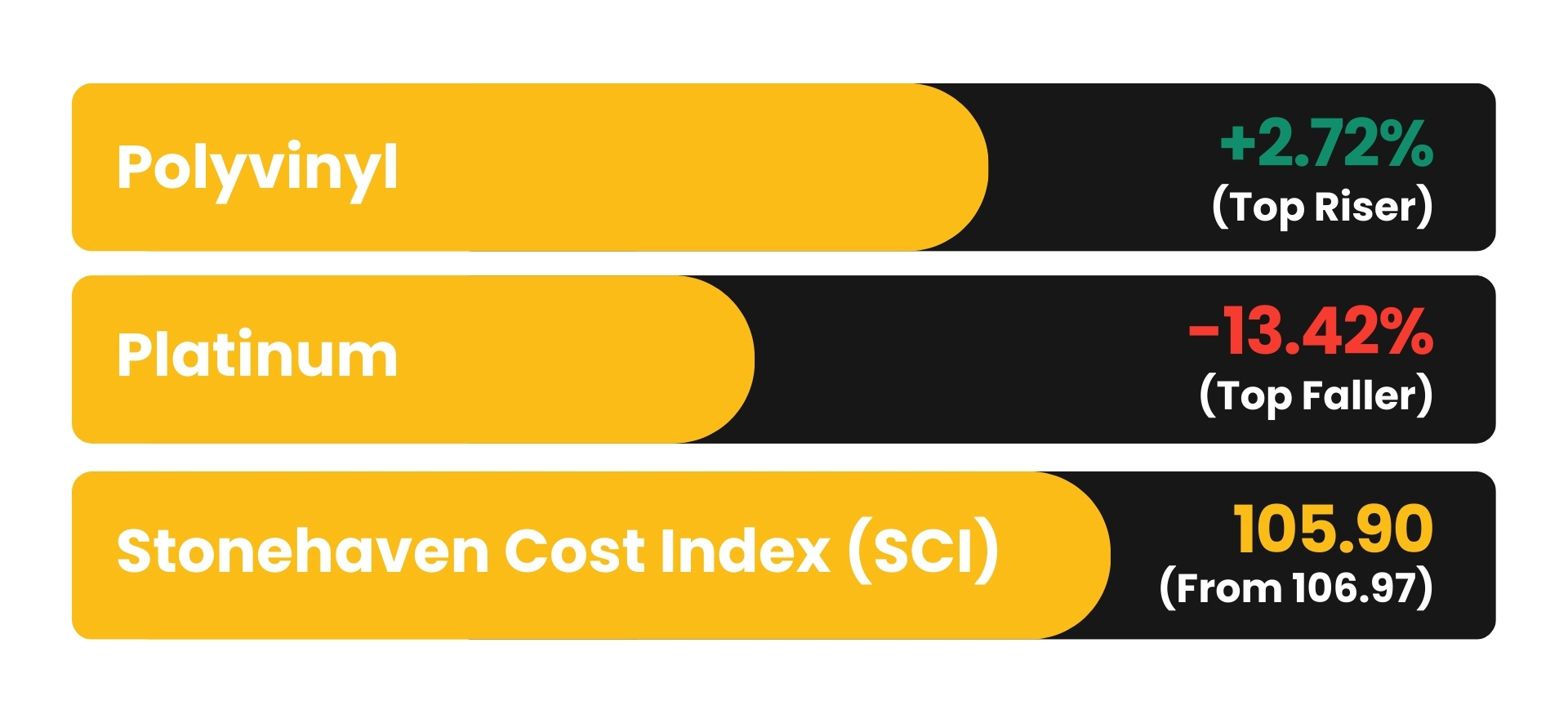
Polyvinyl (PVC) – This week’s biggest riser. Expect upward cost pressure across plastic-based construction materials, particularly within piping, conduits, and specialist MEP components where polymer pricing directly affects procurement rates.
-
Platinum – This week’s biggest faller. Short-term easing is anticipated for high-spec MEP systems and specialist industrial equipment where precious-metal exposure influences manufacturing costs.
-
Cold-Rolled Coil (CRC) – Broadly stable this week, supporting near-term cost certainty for fabricated sheet-metal packages such as ductwork, lightweight steel components, and selected façade or fit-out metal elements, subject to unchanged lead times and supplier terms.
This Week's Market Movers
Material Movement This Week
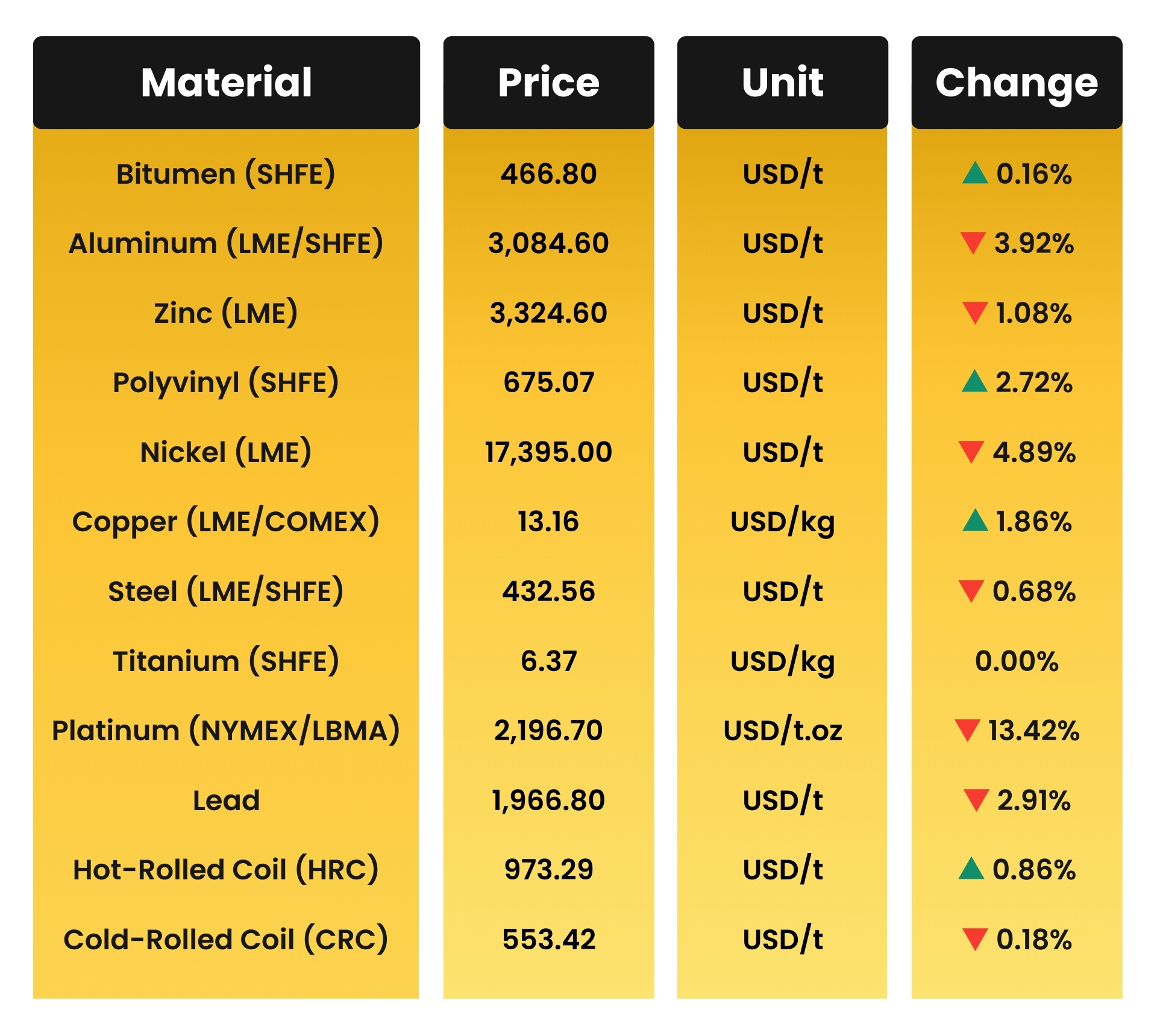
*Rates as of 3rd February 2026
Material of the Week
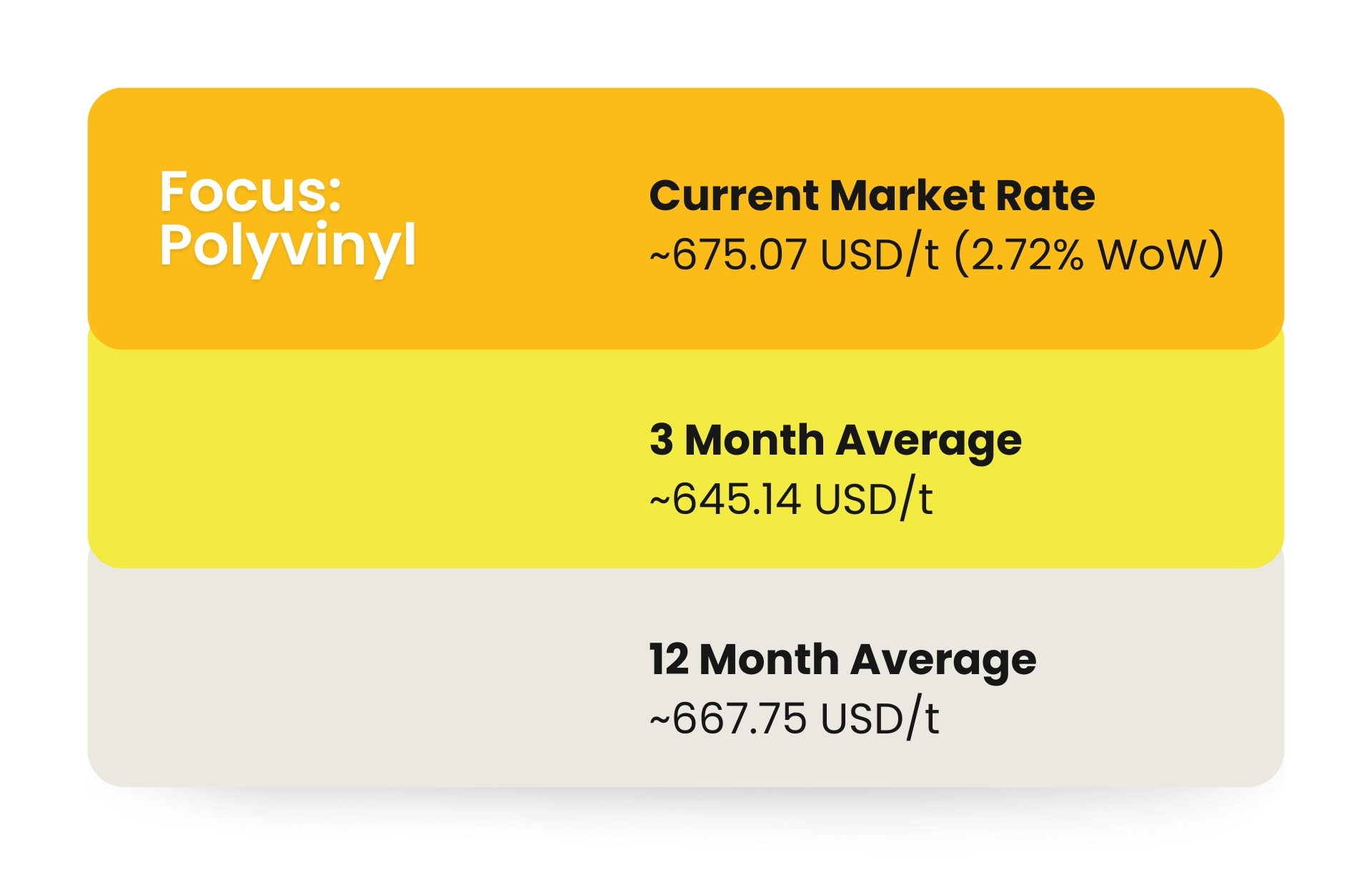
*Rates as of 3rd February 2026
Material Of The Week (Yearly Price Fluctuation)
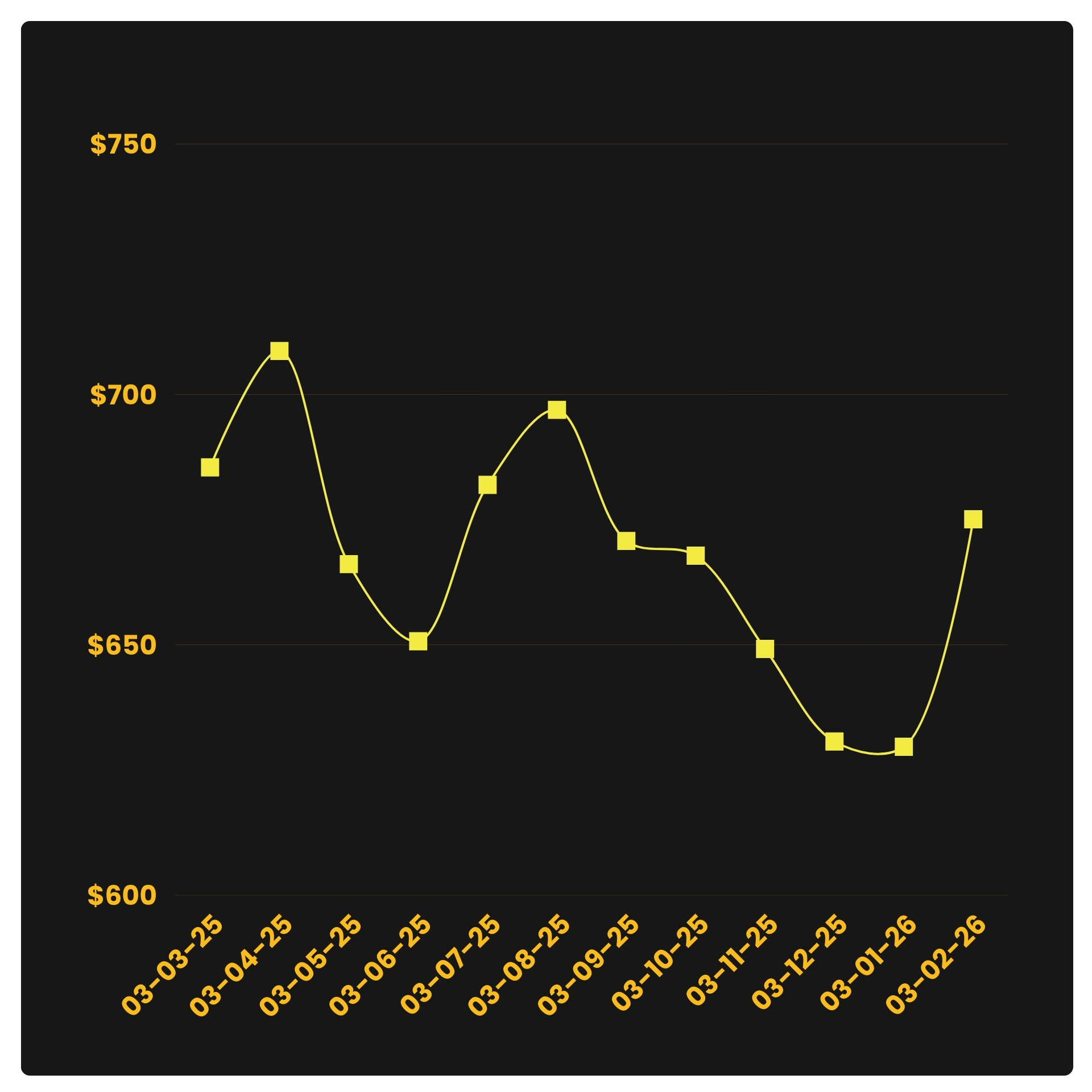
*Rates as of 03rd February 2025 - 03rd February 2026
To view the price fluctuations in detail, please download our latest dataset below.
Stonehaven Cost Index (SCI)
Index baseline (01 September 2025) = 100
Current SCI: 105.90 (Decrease from 106.97 on 27th Jan)
WoW change: ▽1.00%
Change from baseline: ▲6.97%
Driver Note
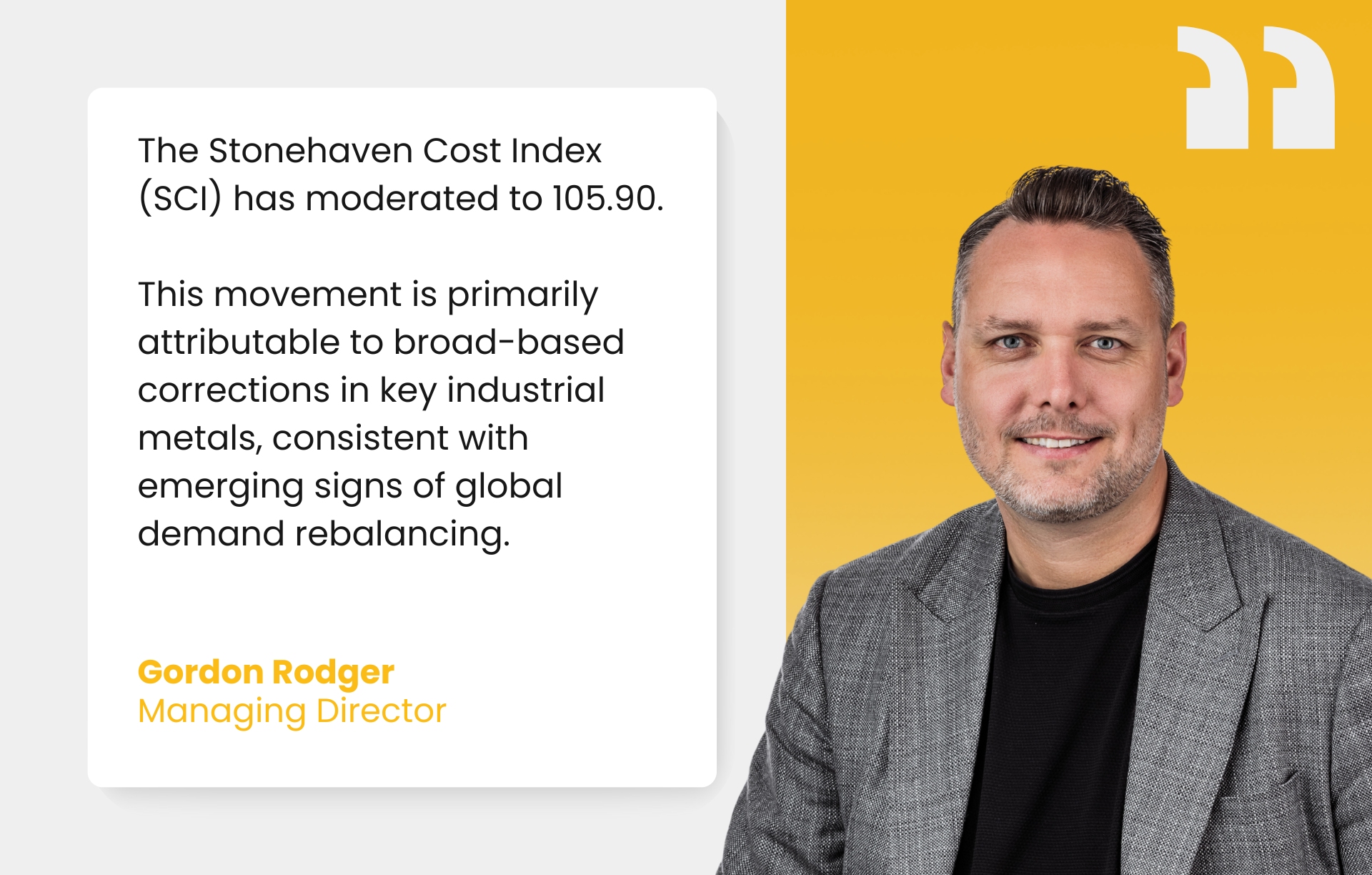
The Stonehaven Cost Index (SCI) has moderated to 105.90, down from 106.97 in the prior week, reflecting a week-on-week decline of 1.00% while remaining 5.90% above the 01 September 2025 baseline.
The softening in the index is driven primarily by broad-based corrections across key industrial metals, most notably aluminium, nickel, lead, and platinum, with platinum recording a pronounced 13.42% week-on-week adjustment amid global demand re balancing.
Steel inputs remain mixed, with Hot-Rolled Coil (HRC) continuing to show marginal strength, partially offset by mild weakness in Cold-Rolled Coil (CRC), which remains broadly stable within normal market tolerance. Polyvinyl emerged as the primary upside mover (2.72%), supported by sustained petrochemical demand, though its impact on the overall index remains contained.
Bitumen, titanium, and CRC exhibited near flat movements, providing a stabilising influence and limiting downside volatility. Overall, the week reflects a short-term consolidation phase rather than a structural cost reversal, with selective material volatility continuing to warrant targeted procurement attention rather than broad cost escalation allowances.
Currency & Inflation Lens
AED vs Key Trading Currencies
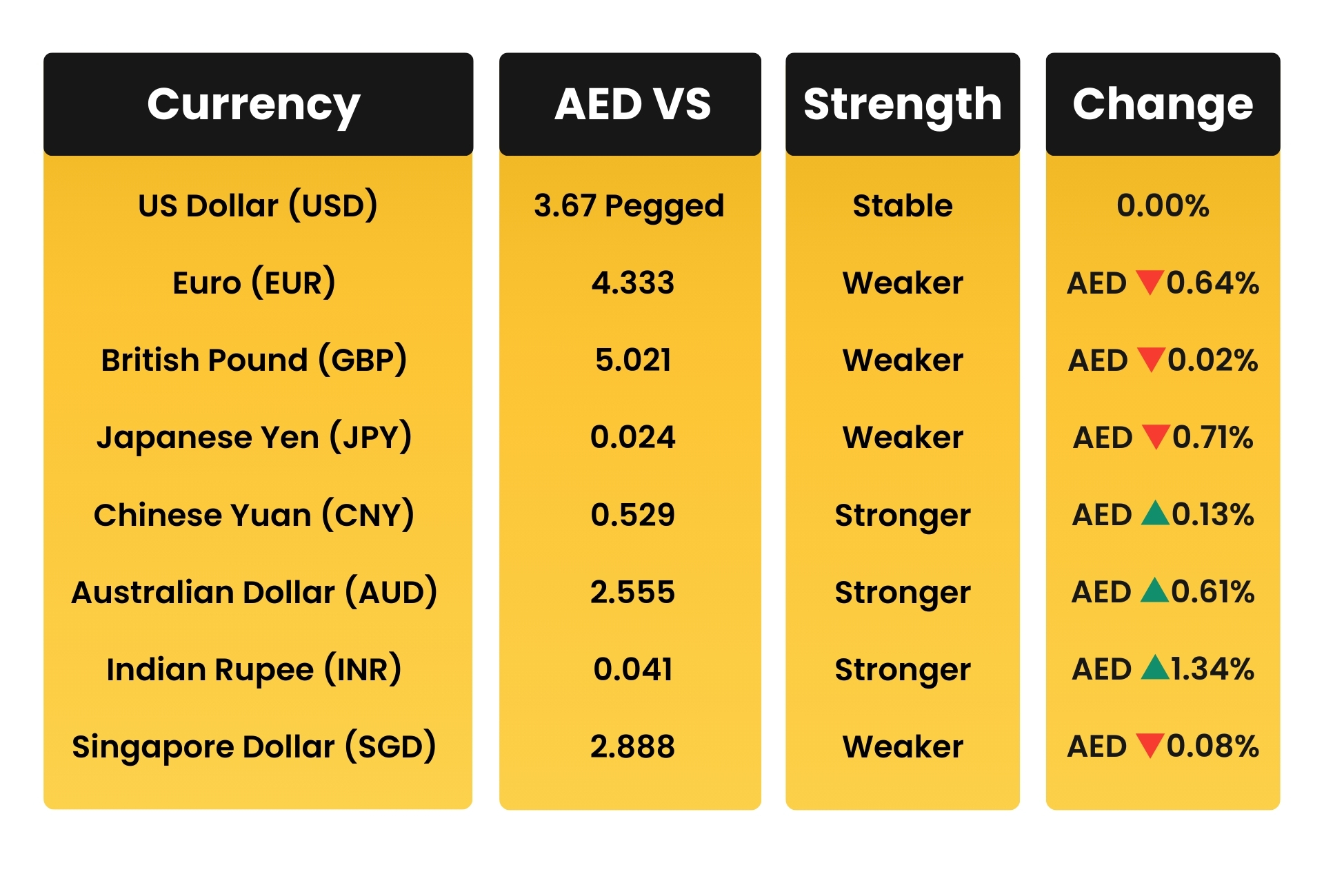
*Rates as of 3rd February 2026
SAR vs Key Trading Currencies
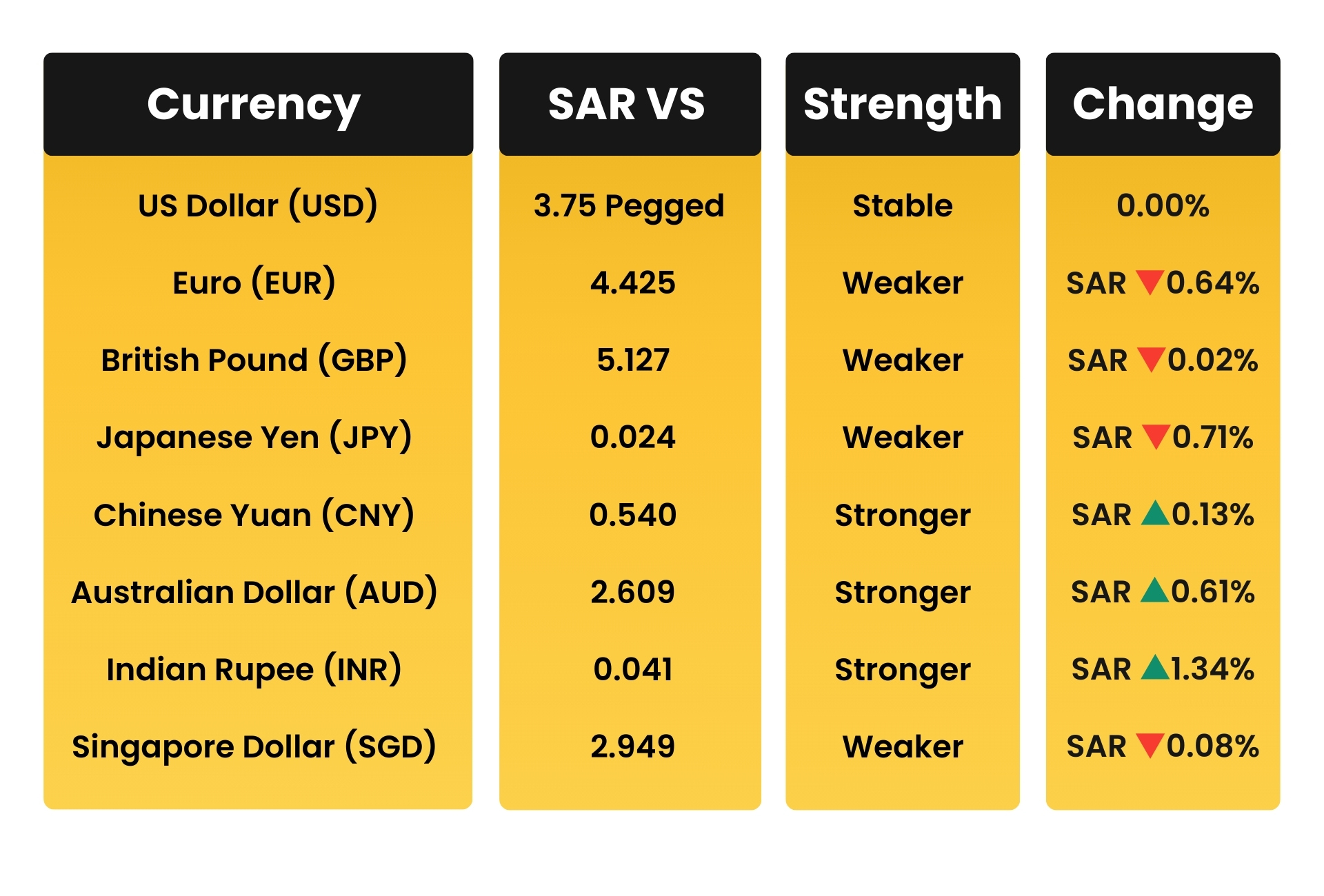
*Rates as of 3rd February 2026
Stonehaven Analysis
The AED and SAR showed closely aligned movements during the week, weakening modestly against the Euro, British Pound, Japanese Yen, and Singapore Dollar.
This trend marginally reduces import purchasing power for goods sourced from Europe and East Asia, introducing limited imported cost pressure on specialist finishes, plant, equipment, and technology driven systems.
Conversely, both currencies strengthened against the Chinese Yuan, Australian Dollar, and Indian Rupee, providing a cost mitigating offset for procurement streams linked to China, Australia, and the Indian subcontinent, particularly within construction materials, MEP components, and manufactured goods.
Overall FX had minimal net impact on core construction budgets this week with FX exposure remaining trade and sourcing specific rather than broad based across the UAE and Saudi Arabian construction markets.
Global Inputs & Freight Benchmarks
Logistics & Freight – Construction Cost Multipliers
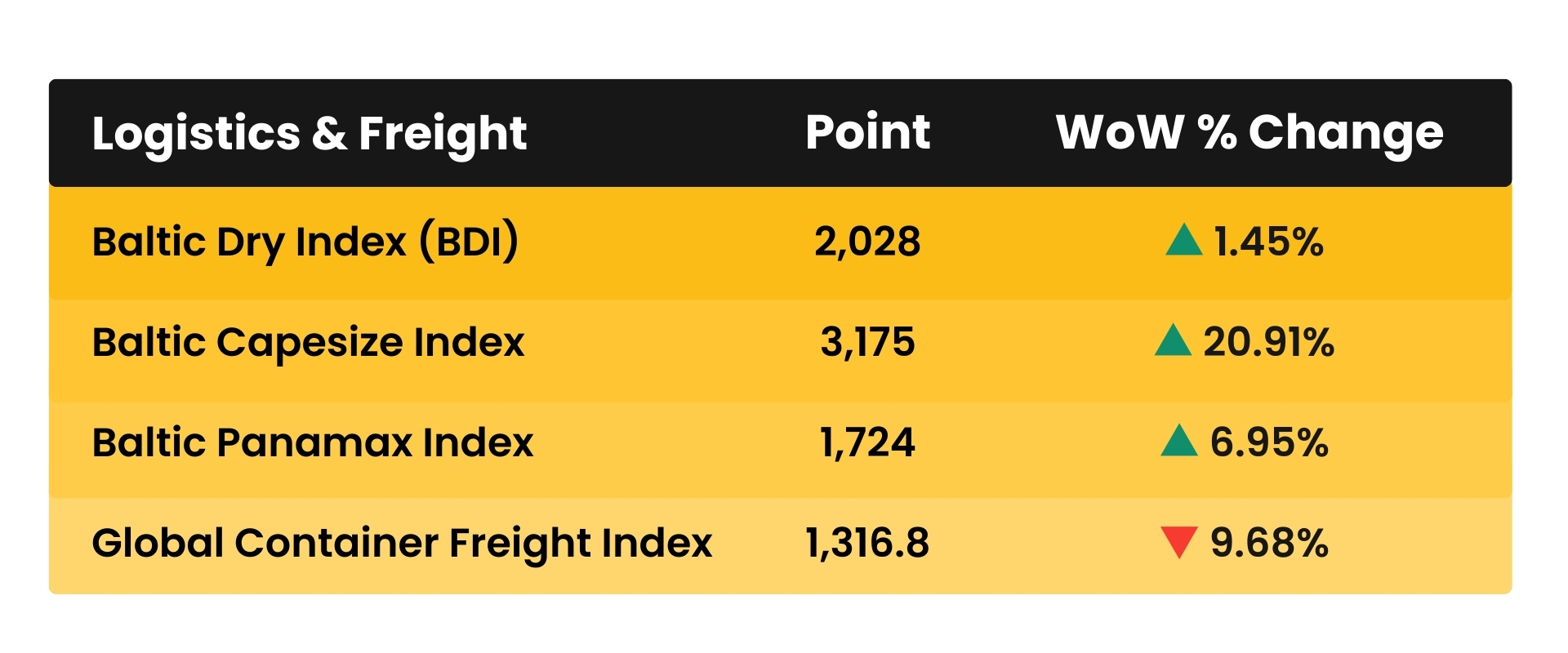
*Rates as of 03rd February 2026
Freight indicators show a divergent week-on-week trend across shipping segments. The Baltic Dry Index increased by 1.45%, driven by a sharp rise in the Capesize Index (20.91%) and continued strength in the Panamax Index (6.95%), signalling tightening capacity and higher transport costs for bulk commodities such as iron ore and steel related inputs.
In contrast, the Global Container Freight Index declined by 9.68% WoW, indicating easing rates for containerised cargo, which provides short term cost relief for imported construction materials, MEP components, and manufactured goods. Overall, logistics cost pressures remain selective, with upward exposure on bulk materials partially offset by reduced container freight rates.
Market Forecast & Watchlist
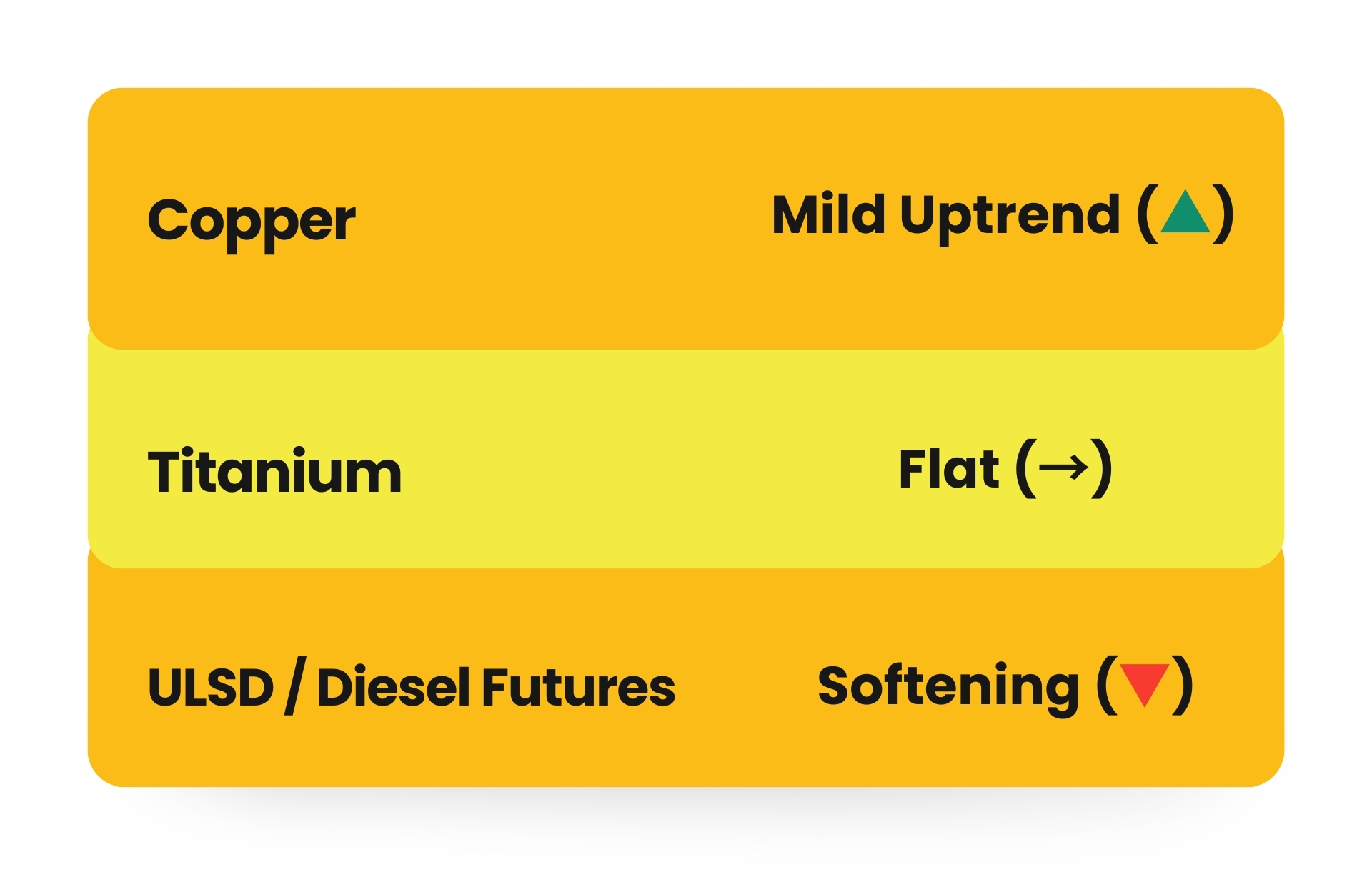
Copper - Mild Uptrend (▲)
Forecast: Gradual upward movement reflecting steady demand; volatility remains moderate.
Watchlist: Electrical and cabling demand, MEP procurement cycles, broader base metal sentiment.
Titanium – Flat (→)
Forecast: Stable pricing with no short-term directional bias.
Watchlist: Specialist demand only; limited exposure to mainstream construction.
ULSD / Diesel Future – Softening (▼)
Forecast: Near term easing provides temporary cost relief.
Watchlist: Energy market volatility, transport costs, site operations and logistics.
Stonehaven Forecast Summary
Overall material movements this week reflect a mixed but largely contained cost environment for the construction sector. Energy linked inputs such as bitumen remain broadly stable with a mild upward bias, while polymer based materials show early signs of firming, warranting monitoring across piping, drainage, and MEP systems.
In contrast, base metals including aluminium, nickel, zinc, lead, and broader steel inputs exhibit a softening trend, easing near term cost pressure on structural, façade, and fabricated steel packages. Copper shows modest upward momentum, indicating potential incremental pressure on electrical and MEP installations if sustained.
Iron ore and steel products remain supportive of overall steel price stability, while fuel costs have eased, providing temporary relief across logistics, transportation, and site operations. Titanium remains stable, reflecting its niche application within specialist construction works, while sharp movements in precious metals continue to have limited relevance to mainstream construction pricing.
Collectively, the data suggests no systemic escalation risk, with cost impacts remaining trade specific and manageable in the short term.
Commercial Guidance
1. Construction & Structural Packages
-
Key Materials: HRC, steel, aluminium, iron ore
-
Market Trend: Steel related inputs broadly stable to softening, with HRC showing mild firming; easing fuel costs support logistics despite mixed bulk freight signals
-
Action: Maintain selective contingencies for HRC and major steel packages only; avoid blanket escalation across structural works
2. MEP, Utilities & Polymer Based Systems
-
Key Materials: Polyvinyl (PVC), copper, CRC, bitumen
-
Market Trend: PVC shows early upward movement, while CRC and bitumen remain stable; copper exhibits mild firming without volatility
-
Action: Closely monitor PVC linked MEP and drainage packages; continue standard competitive tendering for stable materials
3. Procurement Strategy
-
Prioritise early procurement for polymer and metal intensive packages where upward signals are emerging
-
Leverage softening and stable materials (aluminium, steel inputs, CRC, bitumen) to retain pricing flexibility and negotiation leverage
Overall Market Position:
-
Construction cost pressures remain contained and selective, with isolated material specific movements rather than systemic escalation
-
Projects can proceed with measured risk management, targeted monitoring of high sensitivity materials, and disciplined budget control, without the need for additional broad contingencies at this stage
Important Disclaimer
The Stonehaven Cost Index (SCI) is provided for general information only and does not constitute a commitment, guarantee, or offer to contract at any price level. The index is based on publicly available commodity data and internal market assessments as of 03 February 2026.
Actual project costs will depend on project-specific scopes, procurement routes, and commercial negotiations. Stonehaven Project Management Services LLC accepts no liability for any loss arising from reliance on this document without appropriate project-specific advice. The index reflects indicative market movements based on weighted construction inputs and does not represent a forecast, tender price, or contractual valuation.
Talk To Our Team
Speak to our cost management specialists to benchmark, forecast, and protect your project margins, using real data from the Stonehaven Cost Index.