






10 March 2026
This Week’s Cost Intelligence
We developed the Stonehaven Cost Index (SCI) to give project teams a clear, dependable snapshot of how construction costs are moving week by week.
This GCC construction cost index continues to highlight shifting construction material prices, FX movements, and freight trends impacting project costs across the UAE and Saudi Arabia. This week’s update (27th February 2026) reflects ongoing volatility in global supply chains, rising alongside fluctuating logistics costs and currency pressures.
For developers, contractors, and cost managers, the Stonehaven Cost Index provides a view of construction cost trends in the Middle East, helping project teams make informed decisions in an increasingly volatile market.
Key Takeaways For Your Projects This Week
-
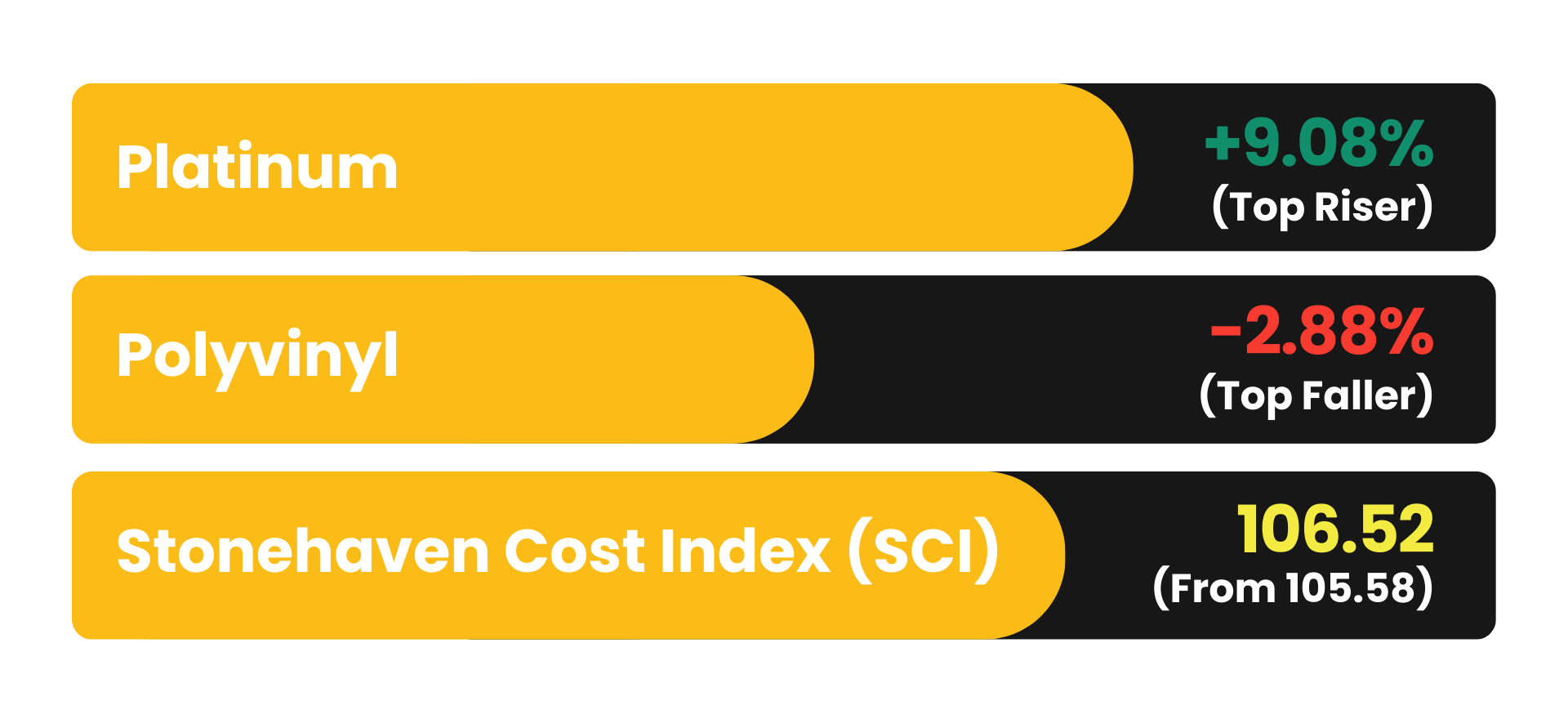
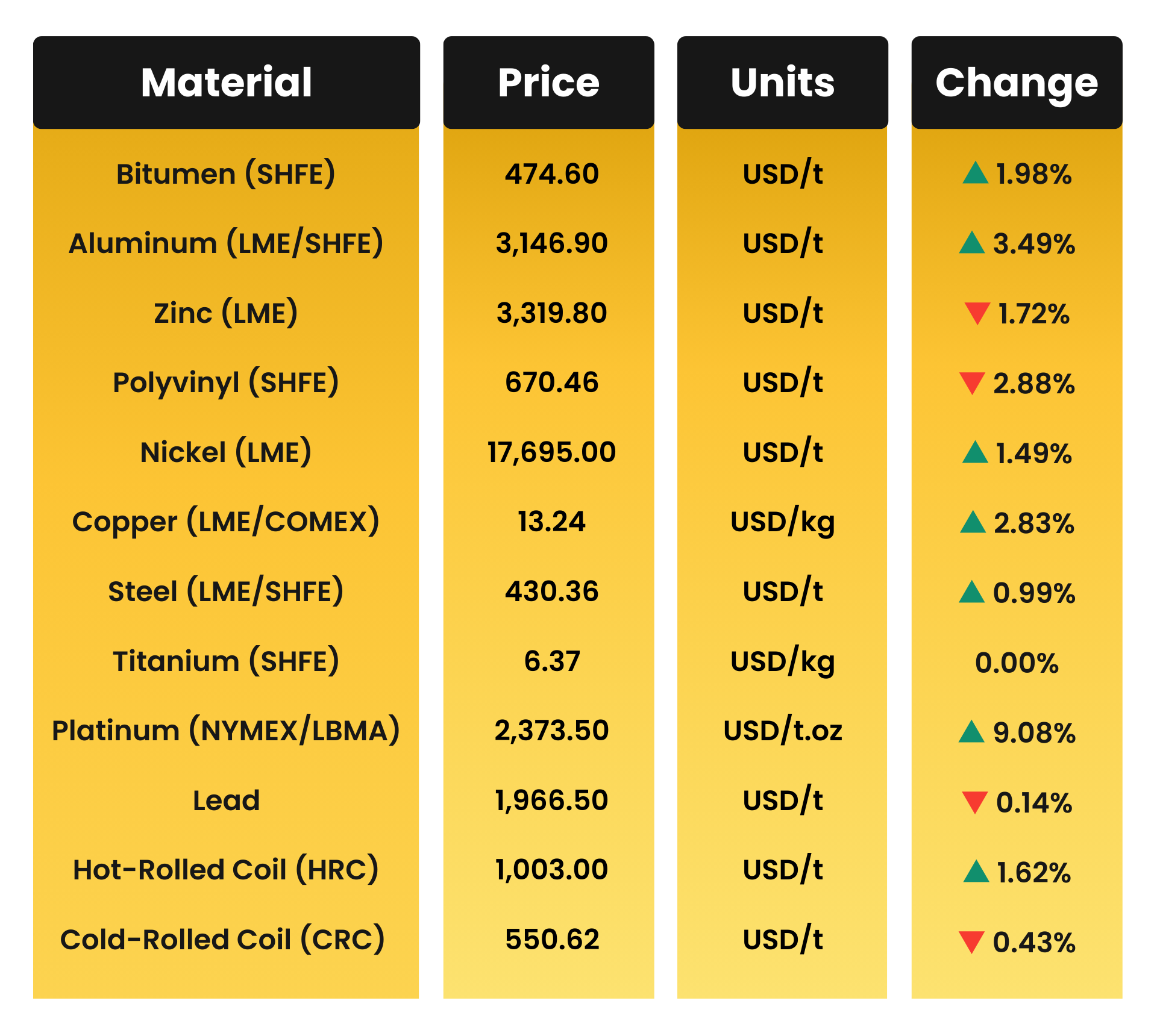
Platinum – This week’s biggest riser (+9.08%). A sharp benchmark increase driven by global commodity trading movements. While platinum has limited direct exposure to most construction packages, sustained volatility in precious metals often signals broader commodity market momentum that can influence industrial materials over time.
-
Polyvinyl (PVC) – This week’s biggest faller (–2.88%). A short-term correction that may provide minor cost relief across PVC-based products including piping systems, drainage components and plastic construction materials, depending on supplier inventory and procurement timing.
-
Steel & Coil Products – Steel (+0.99%) and Hot-Rolled Coil (HRC +1.62%) recorded modest increases this week. While movements remain within manageable ranges, continued upward momentum could gradually influence structural steel packages, reinforcement-related components and fabricated steel elements across upcoming procurement cycles.
This Week's Market Movers
Material Movement This Week
*Rates as of 27th February 2026
Material of the Week
*Rates as of 27th February 2026
Material Of The Week (Yearly Price Fluctuation)
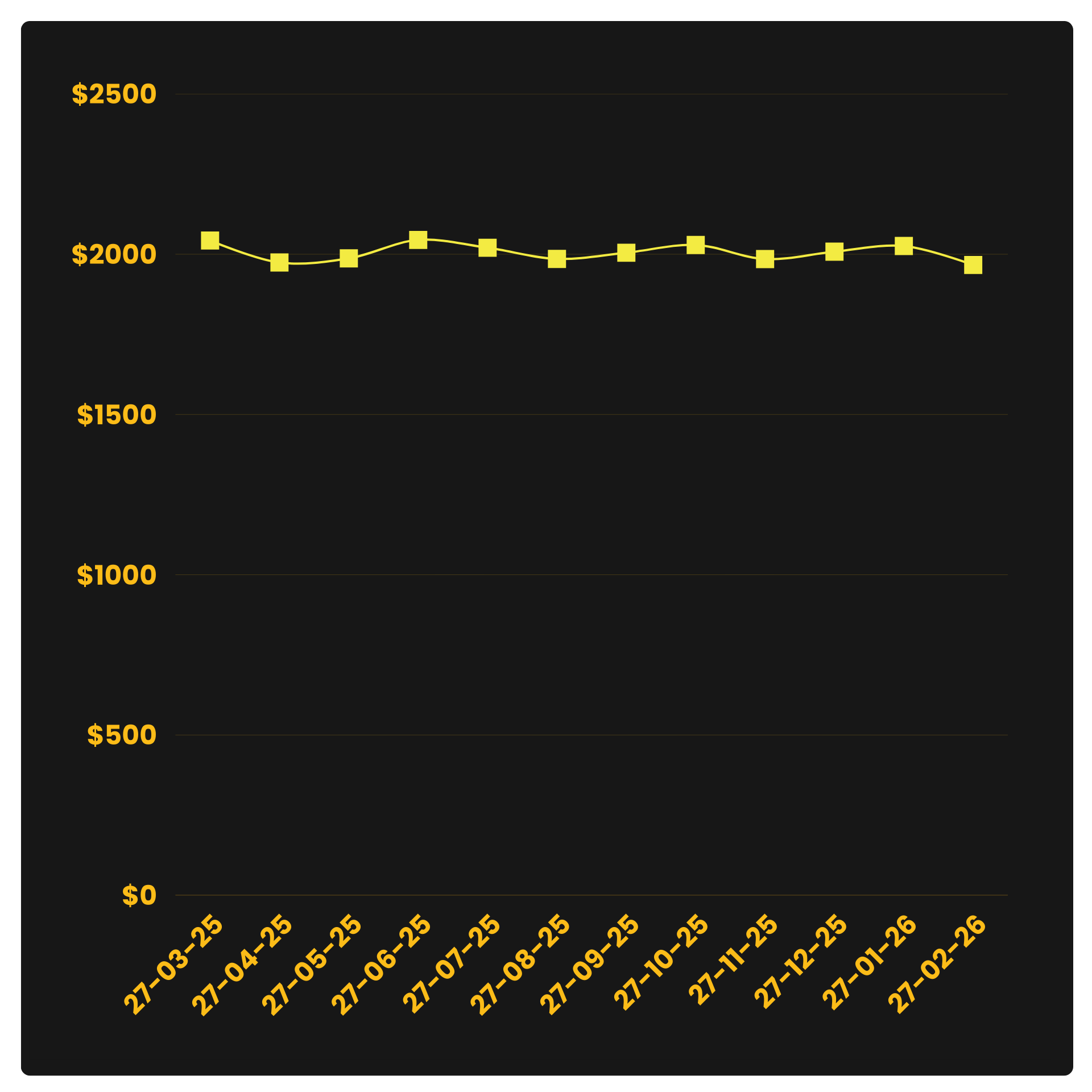
*Rates as of 27th February 2025 - 27th February 2026
To view the price fluctuations in detail, please download our latest dataset below.
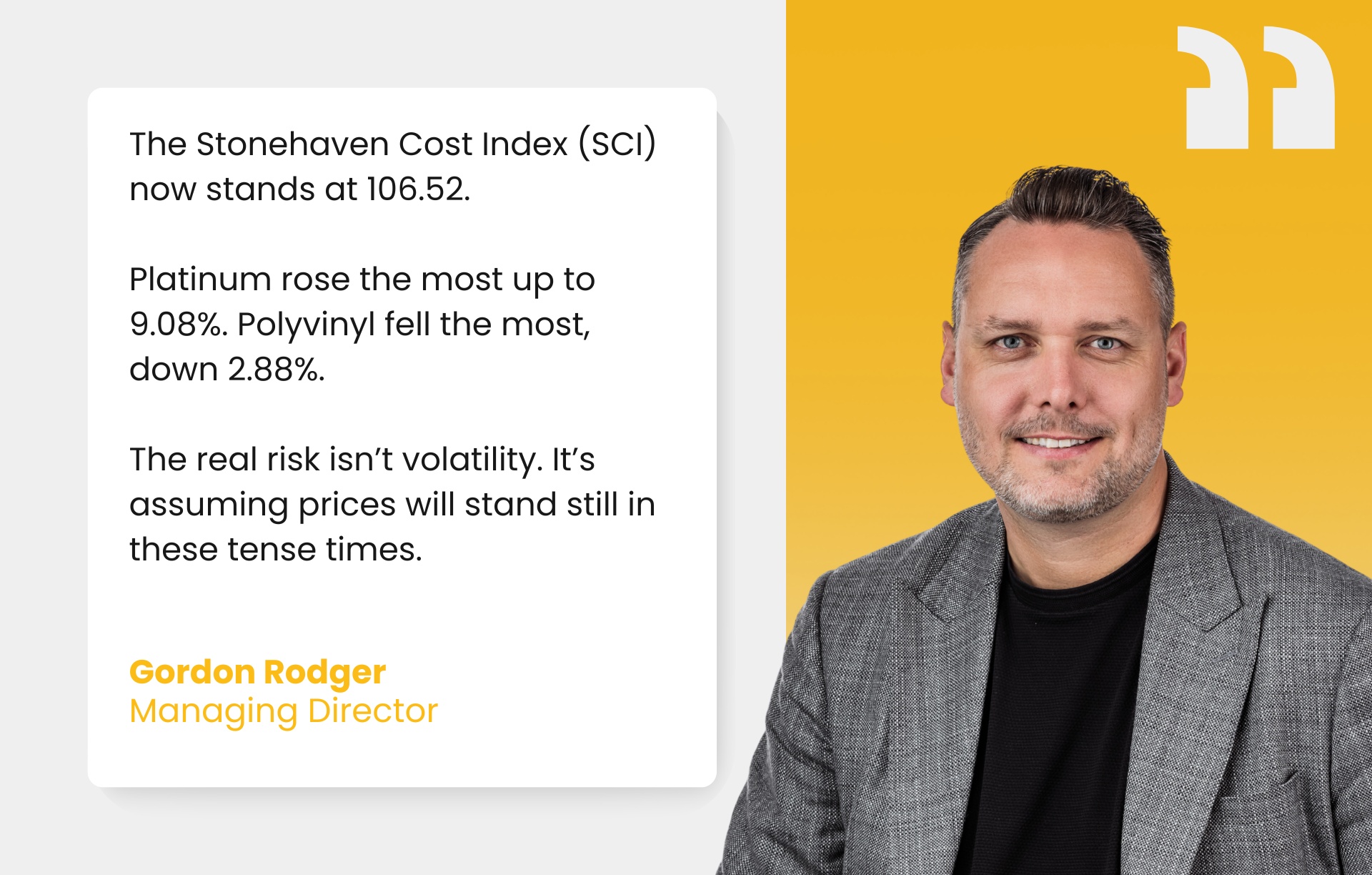
Stonehaven Cost Index (SCI)
Index baseline (01 September 2025) = 100
Current SCI: 106.52 (increase from 105.58 on 20th Feb)
WoW change: ▲0.89%
Change from baseline: ▲6.52%
Driver Note
Currency & Inflation Lens
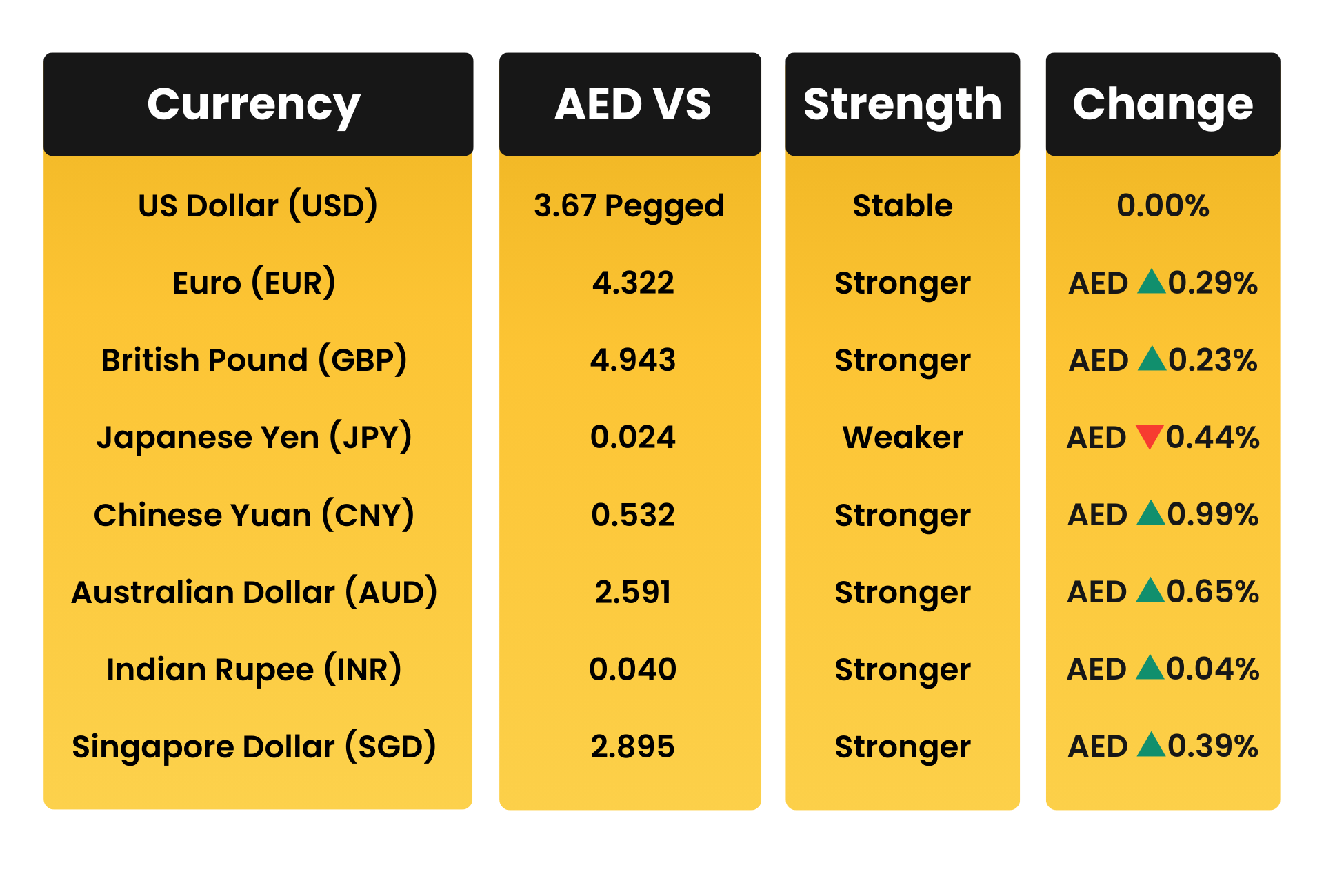
AED vs Key Trading Currencies
*Rates as of 27th February 2026
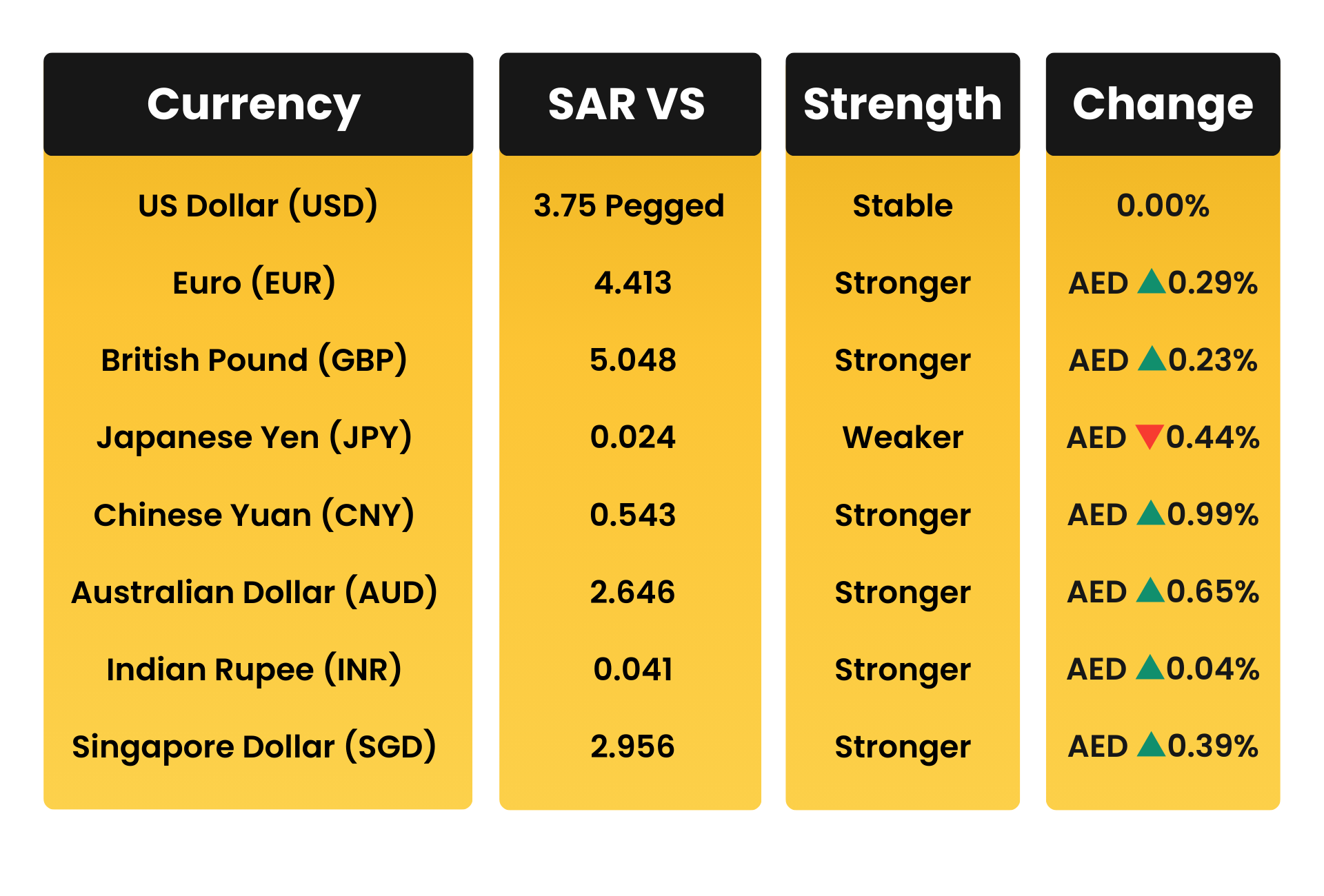
SAR vs Key Trading Currencies
*Rates as of 27th February 2026
Stonehaven Analysis
Most currencies are showing a strengthening trend, with the Euro and British Pound appreciating against both the AED and SAR.
The Pound has seen a more moderate increase compared to the Euro. The Japanese Yen continues to weaken against both the AED and SAR. Meanwhile, the Chinese Yuan, Australian Dollar, Indian Rupee, and Singapore Dollar have all strengthened consistently, with the Yuan experiencing the most notable gain.
Overall, fluctuations have been mainly observed in the stronger currencies, while the AED and SAR have remained relatively unchanged.
Global Inputs & Freight Benchmarks
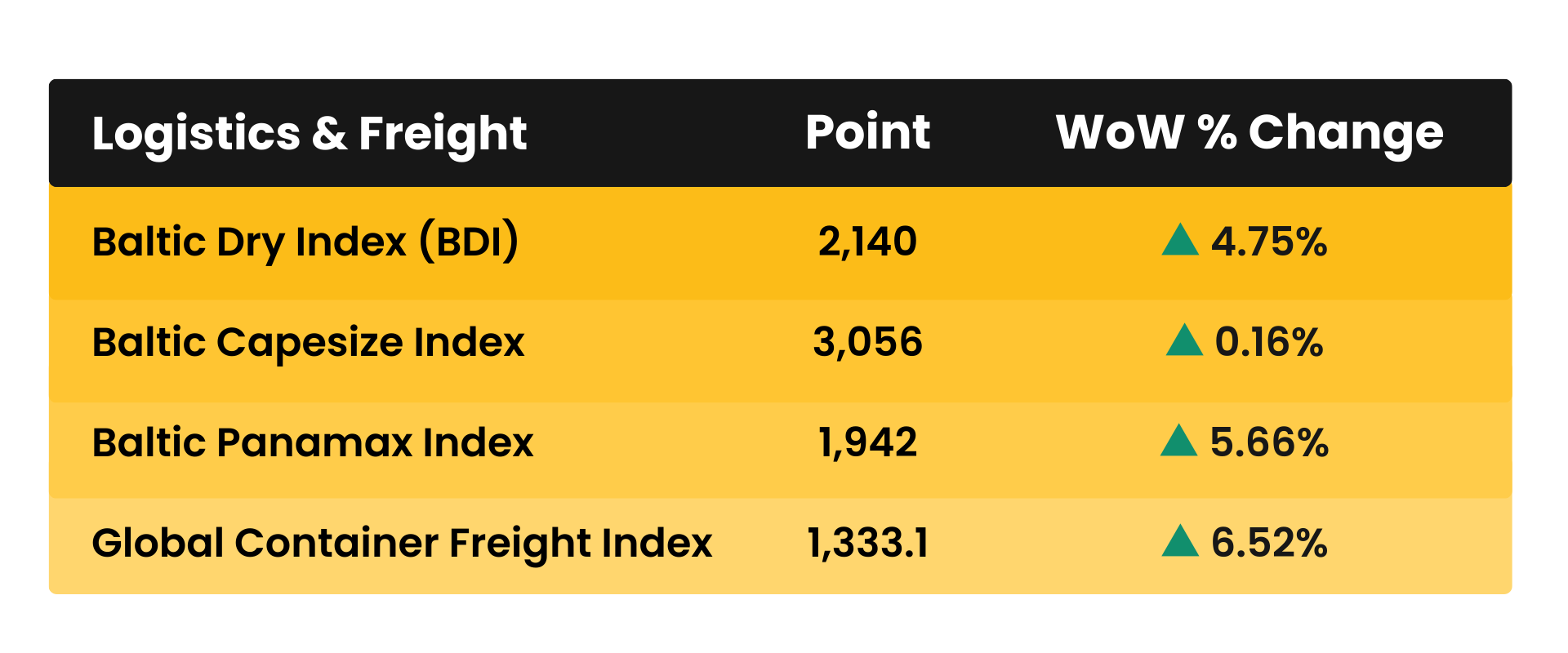
Logistics & Freight – Construction Cost Multipliers
*Rates as of 27th February 2026
The recent increases in logistics and freight indices could have a notable impact on the construction sector. The Baltic Dry Index (BDI) has risen by 4.75%, indicating higher shipping costs for bulk materials.
The Baltic Panamax Index saw a 5.66% increase, affecting mid-sized bulk shipments, while the Global Container Freight Index surged by 6.52%, reflecting higher costs for shipping manufactured components and materials.
These rising freight costs are likely to increase procurement expenses, particularly for imported materials and specialized equipment, potentially leading to higher overall construction costs and adjustments in project budgets and timelines.
Market Forecast & Watchlist
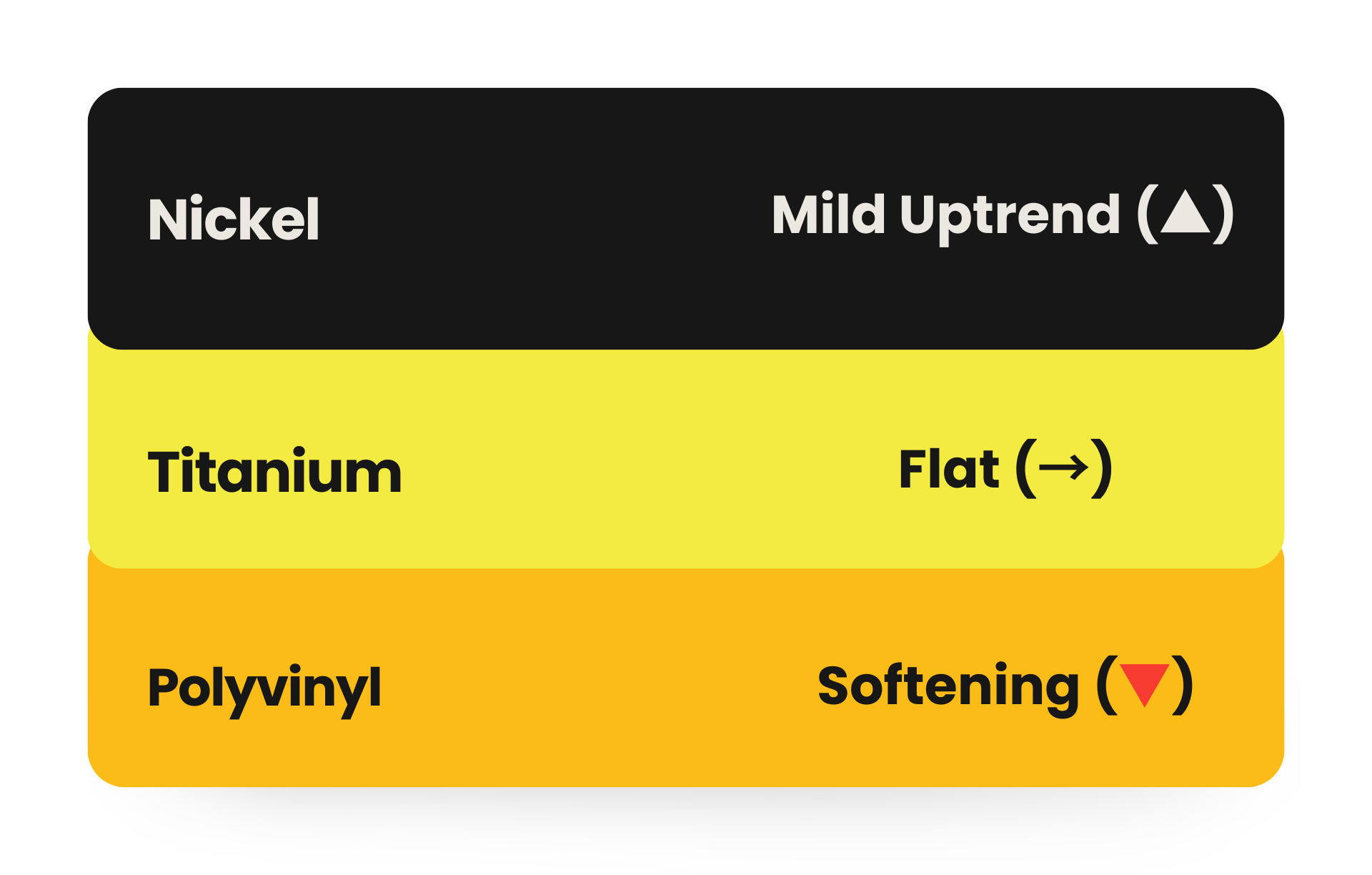
Nickel: Mild Uptrend (▲)
Forecast : Strong demand from the battery and stainless steel sectors, with a sharp upward trend; potential for continued price rises.
Watchlist : Nickel mining capacity, electric vehicle demand, battery production growth.
Titanium – Flat (→)
Forecast : Stable pricing with no significant movement, largely driven by consistent demand from aerospace and defense sectors.
Watchlist : Aerospace production levels, defense industry demand, production cost shifts.
Polyvinyl– Softening (▼)
Forecast : Prices are softening due to reduced demand in the steel sector, with further downside risk if construction activity slows.
Watchlist : Steel production rates, PVC demand cycles, regulatory changes, raw material costs.
Stonehaven Forecast Summary
The market for various materials shows mixed trends, with some experiencing price increases and others facing declines. Bitumen, Aluminum, Nickel, Copper, Steel, Platinum, and Hot-Rolled Coil are all seeing upward price movements driven by strong demand in infrastructure, automotive, and industrial sectors, as well as global economic recovery.
On the other hand, materials like Zinc, Polyvinyl, Lead, and Cold-Rolled Coil are experiencing declines, mainly due to reduced demand in construction and manufacturing or shifts in the steel sector. Titanium remains stable, with no significant price movement, driven by consistent demand from the aerospace and defense industries.
As we look ahead, key factors to monitor include global infrastructure activity, raw material costs, supply chain stability, and shifts in industry specific demand, particularly in automotive and construction sectors, which will influence the direction of prices for these materials.
Commercial Guidance
1. Structural & Steel Packages
Key Materials: Steel (LME/SHFE), HRC, CRC, zinc, aluminium
Position: Steel inputs softened modestly while HRC remains stable; zinc firming may influence galvanizing costs.
Action: Avoid blanket escalation across structural packages; maintain selective contingencies for galvanised elements and aluminium intensive façade systems. Leverage steel softness in negotiations.
2. MEP & Polymer Based Systems
Key Materials: Polyvinyl (PVC), copper, nickel, lead
Position: PVC shows upward momentum; copper consolidating; nickel and lead moderately firm.
Action: Closely monitor PVC linked drainage, piping, and cable insulation packages; consider staged procurement where polymer exposure is high. No broad cost uplifts required at this stage.
3. Energy & Logistics Exposure
Key Inputs: Bitumen, fuel linked freight indices
Position: Freight benchmarks eased, reducing logistics inflation risk.
Action: Maintain competitive tendering assumptions for logistics heavy packages; no immediate freight contingency uplift warranted.
Important Disclaimer
The Stonehaven Cost Index (SCI) is provided for general information only and does not constitute a commitment, guarantee, or offer to contract at any price level. The index is based on publicly available commodity data and internal market assessments as of 27th February 2026.
Actual project costs will depend on project-specific scopes, procurement routes, and commercial negotiations. Stonehaven Project Management Services LLC accepts no liability for any loss arising from reliance on this document without appropriate project-specific advice. The index reflects indicative market movements based on weighted construction inputs and does not represent a forecast, tender price, or contractual valuation.
FAQ's
1. What is the Stonehaven Construction Cost Index and how is it calculated?
The GCC construction cost index measures changes in construction material prices, labour costs, freight rates and currency movements across the UAE and Saudi Arabia. It is calculated using a weighted baseline of key materials such as steel, bitumen, copper and more combined with logistics and FX data.
2. What affects construction material prices in the Middle East?
Several factors influence construction material prices in the Middle East, including global commodity markets, shipping costs, fuel prices and currency movements. Materials like steel, copper and bitumen are particularly sensitive to international demand and logistics conditions, which directly impact construction cost trends in the GCC.
3. How often do construction material prices change?
Construction material prices can change daily depending on global market conditions. Factors such as commodity prices, shipping costs and fuel rates influence short-term movements, which is why tracking weekly construction material price updates is important for sensitive cost planning.
4. How is the Stonehaven Construction Cost Index prepared?
The construction cost index is prepared using weekly data collection across key materials, currencies and freight rates. Cost managers monitor these movements to reflect current conditions. This is then reviewed by the commercial management alongside foreign exchange and logistics trends, which influence construction pricing across the GCC before presenting to our readers.
Talk To Our Team
Speak to our cost management specialists to benchmark, forecast, and protect your project margins, using real data from the Stonehaven Cost Index.